
- SHOP
- /
- FLORAL WATERS
- /
- Emollients
- /
- Urea


Urea
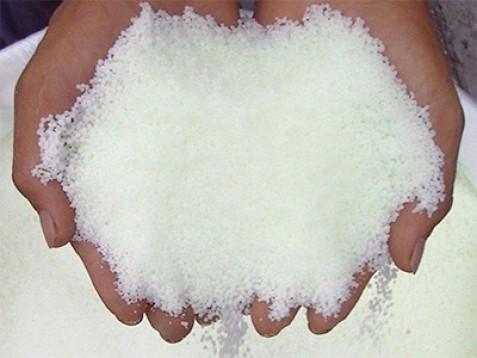
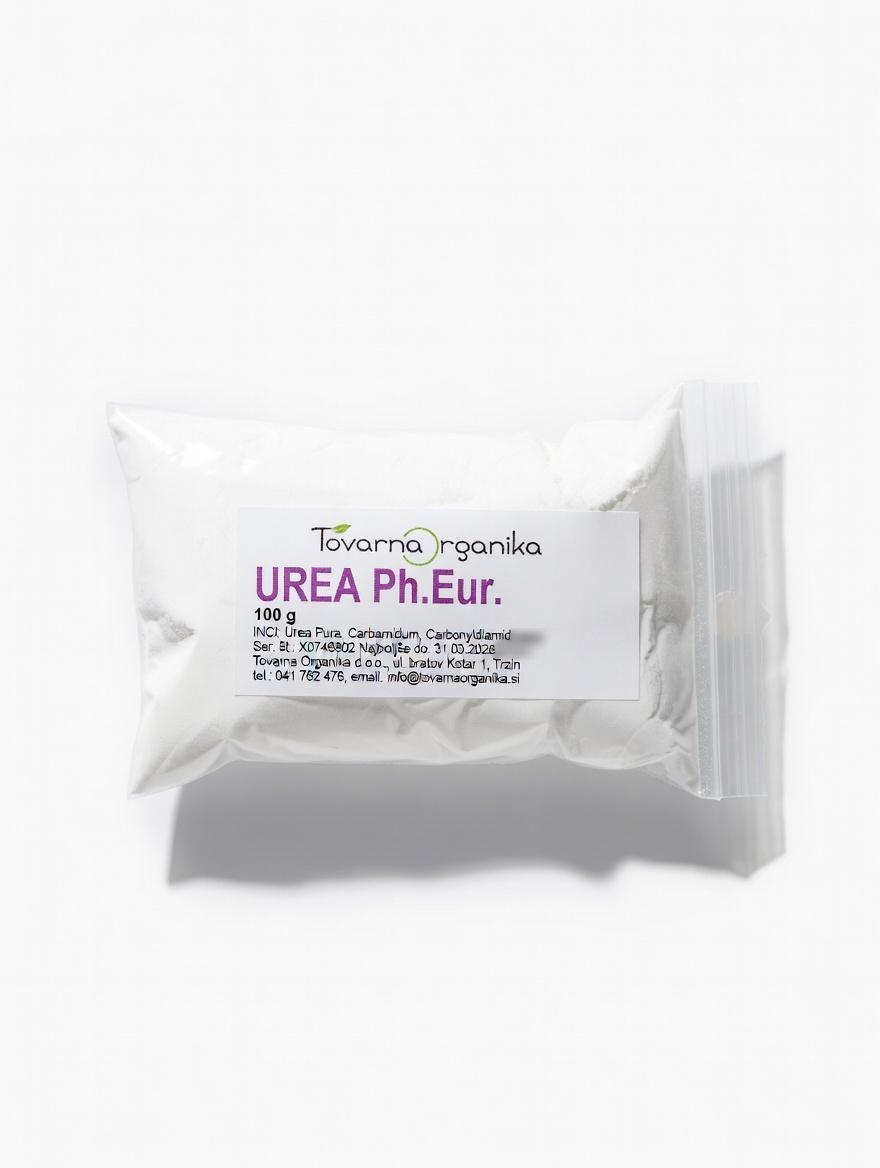
Urea is one of the most important end products of protein degradation in mammals. Most of it is excreted in urine, and it is found in virtually all bodily fluids. Urea was the first synthetically produced organic compound in the 19th century, so any concern about obtaining it through isolation from animals is entirely unnecessary!
The effectiveness of urea in the skin is based on numerous properties, the most important of which is its ability to hydrate the skin. The use of urea dermally for therapeutic purposes dates back to 1932, when a hand cream containing urea was recommended for the treatment of eczema. In the 1960s, its moisturising action in the stratum corneum was demonstrated, which was particularly pronounced in skin conditions involving keratinisation disorders: neurodermatitis, psoriasis, eczemas of various origins, as well as in itching caused by skin dryness. In the symptom of "dry skin", which is not necessarily a consequence of ageing but is also observed by paediatricians, a 50% reduction in urea content was found in the affected areas of the skin. The greatest loss of this natural moisturising factor, as much as 85%, was measured in the skin of patients with neurodermatitis. Today, the use of urea in cosmetics and dermatology is well established and the two fields overlap. It may be found in medicated ointments for the conditions listed above, topical therapeutics with corticosteroids, antifungals, tretinoin (urea also enhances the penetration of other active substances), or in cosmetics. The latter is also intended for care after recovery or between disease flare-ups, i.e. for prophylactic use. Such care certainly keeps the skin beautiful — and healthy!
The basic requirement for incorporating compounds into cosmetic products is that, following their absorption into the epidermis, no effects on the body other than on the skin occur. After absorption of urea, allergic and photoallergic reactions are excluded. The active substance is practically free of side effects. Urea is incorporated into cosmetic products for the purpose of moisturising the skin, as it increases the water-binding capacity of the stratum corneum. During diffusion into the stratum corneum, it breaks the hydrogen bonds in the protein structure of desmosomes. This disrupts the integrity of epidermal keratin and exposes water-binding sites. Keratin therefore binds more water in the presence of urea. Urea increases the intracellular water content by binding it into its own crystal structure. In this way, urea acts as a true moisturiser, not merely a "humectant". The latter — of which glycerol and propylene glycol are well known examples — are capable of binding water, but can draw water away from the stratum corneum, which further dries out the skin.
The keratolytic effect of urea at commonly used concentrations, which loosens the intercellular connections in the skin, also makes the skin softer. Urea acts antimicrobially by removing water from microorganisms, thereby slowing their growth. It acts as a buffer and maintains appropriate acidity and thus the physiological balance on the skin surface. In dry, ageing, or sensitive skin, its effect in soothing itching and reducing the skin's susceptibility to infections and inflammation is also important.
Table 2: Dermatological properties of urea
|
binds water |
|
acts keratolytically and keratoplastically (depending on concentration) |
|
enhances penetration |
|
inhibits proliferation |
|
acts antibacterially |
|
soothes itching |
|
acts as a buffer (regulates the skin's hydrolipidic protective mantle) |
|
does not cause allergies |
The effectiveness of cosmetic and medicinal dermal preparations depends on three factors: the properties of the incorporated active substance, the base used, and the condition of the skin. The closer the composition of the preparation is to the hydrolipidic film on the skin surface, the better the skin tolerates it. For dry skin care, emulsions (semi-solid creams or liquid emulsions) containing more of the lipophilic phase are generally recommended, while for oily skin care, those with more of the hydrophilic phase are preferred. Healthy skin without inflammatory changes can tolerate urea concentrations up to 20%. In chronic inflammatory diseases, the urea concentration should not exceed 5 to 10%. In cases of acute inflammation, concentrations above 5% can already cause a burning sensation on the skin. A 5% urea preparation in an ointment base is, as a precaution, also recommended for infants and young children and is most often found in cosmetic products. In general, urea incorporated into O/W emulsion systems is better tolerated, where droplets of the inner — oil phase are distributed throughout the outer — water phase. At higher concentrations, however, urea can cause irritation, especially if it is present in W/O emulsions or in purely lipophilic ointments, such as petroleum jelly.
In the absorption of urea into the skin, the greatest importance is attributed to the base in which it is incorporated. It is absorbed most rapidly from O/W emulsions, which is why such preparations for external use are intended for immediate action. The upper stratum corneum is moisturised quickly and evenly, but the effect does not last long, making these preparations suitable for regular, daily care. The moisturising effect of urea from lipophilic emulsions or ointments develops more slowly and lasts longer. An approximately equal concentration of urea is achieved throughout the entire stratum corneum, with the difference that higher concentrations are detected throughout the entire epidermis. Due to the occlusive coating provided by the lipid components on the skin, the ability of urea to penetrate deeper layers of the skin is increased and the evaporation of water from its surface is reduced. Dermal application of urea incorporated into emulsion systems where the outer phase consists of lipids is desirable primarily during the treatment of disease-related and other skin conditions where we wish to achieve increased hydration in all layers of the skin or improve the penetration of other medicinal active substances into the skin.
Urea is an important component of the moisturising factor naturally present in the skin. Not only does it retain water in the skin, but it also acts on the stratum corneum in such a way that it can bind more water. Therefore, cosmetic products with urea are suitable for the care of all parts of the body, in all conditions where dry, rough, flaking skin occurs. Together with other active ingredients, the natural moisturising factor also provides protection against skin dehydration caused by environmental factors at work (with water, detergents) and during leisure time (sun, wind).
Urea is intended for external use only at concentrations between 5 and 15%.
It is used in creams, lotions, sun creams, after-sun lotions, exfoliating creams, shampoos, and shower gels.
VIR: http://www.pomurske-lekarne.si/si/index.cfm?id=1689
Recommended Products


Rates vary by destination and complexity.
We recommend this shipping type based on item size, type and fragility.
Please contact us for more information.
We're really sorry for this.
Please contact us at info@tovarnaorganika.si to get additional support.
We're really sorry for this.
Please contact us at info@tovarnaorganika.si to get additional support.