
- SHOP
- /
- Colourants
- /
- Dry flowers, extracts
- /
- Calendula flowers (petals) - dried
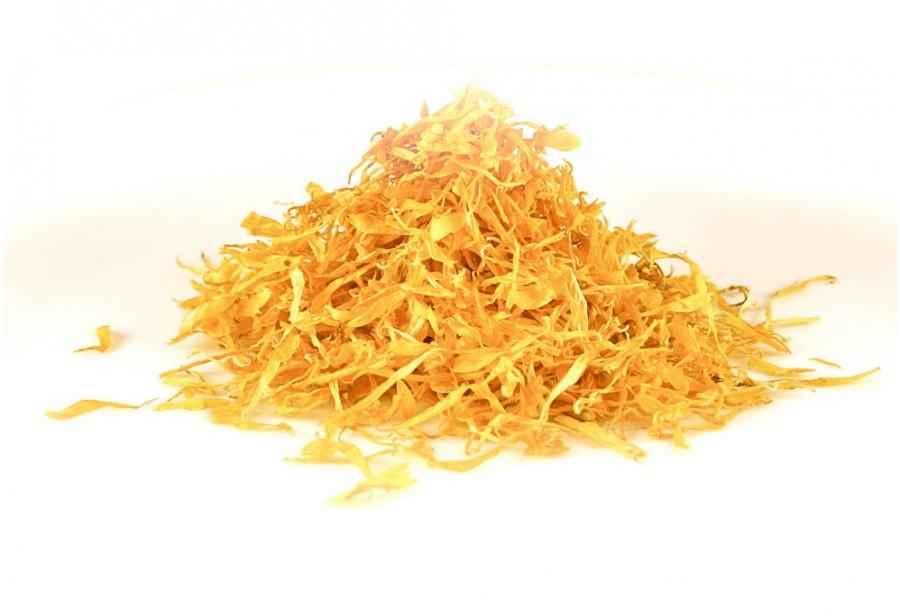
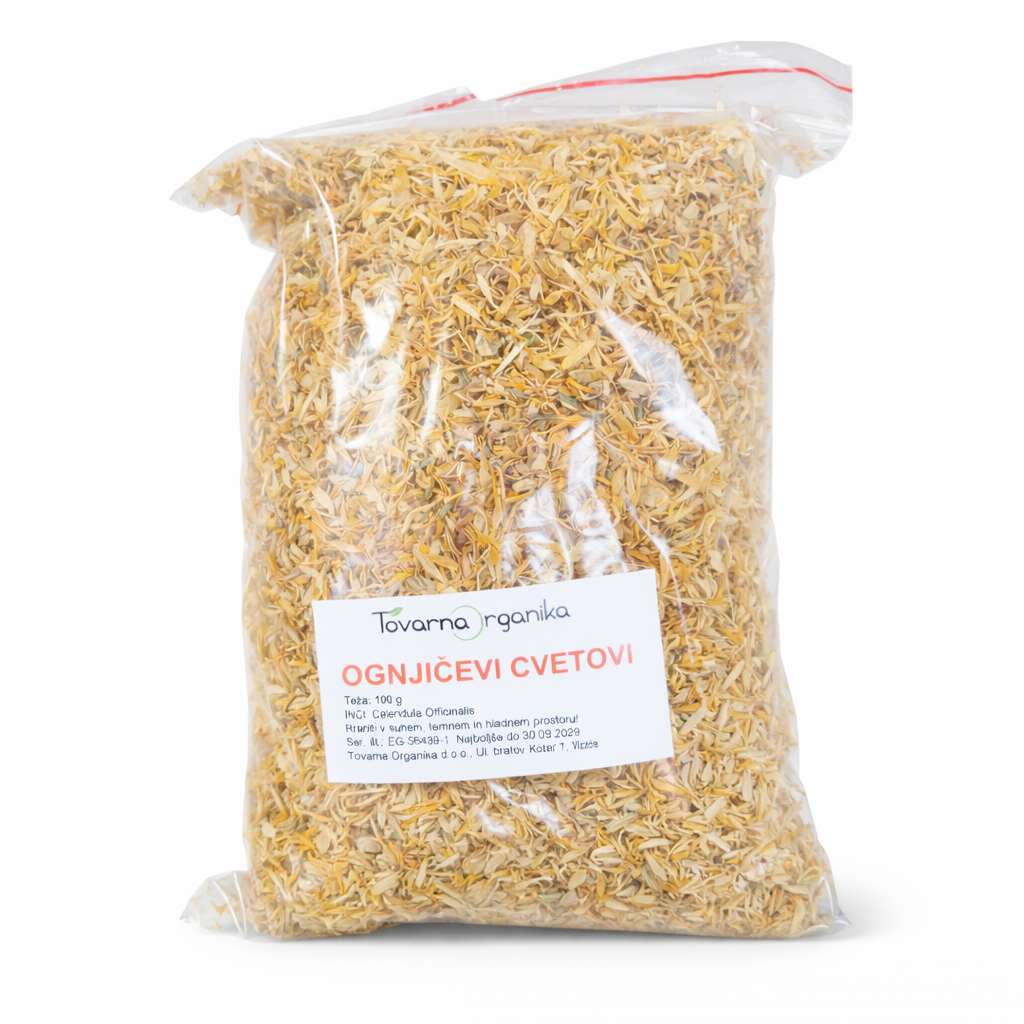
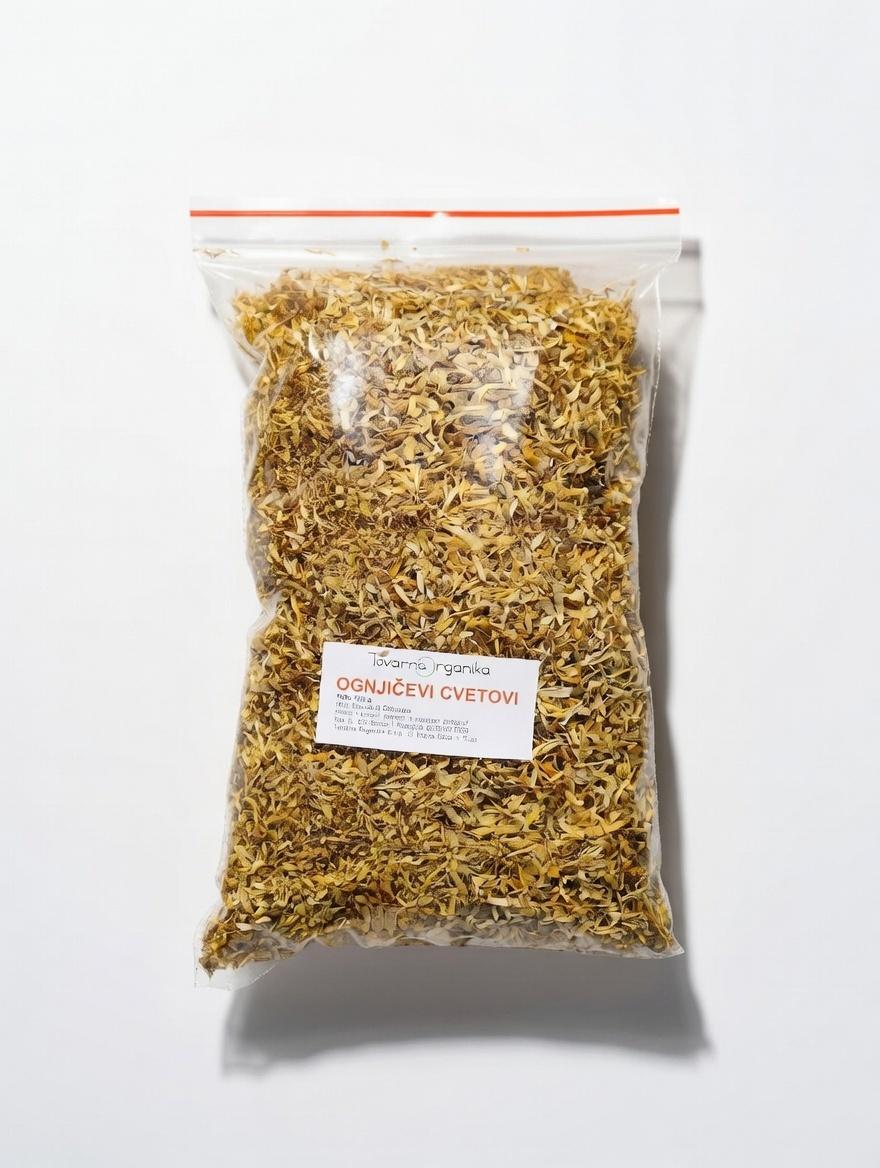


Calendula flowers (petals) - dried
Calendula and its healing properties
Calendula is also known by many other names, including marigold, pot marigold, garden marigold, and common marigold.
The Latin name for calendula is Calendula officinalis. The name calendula derives from the word "calends," meaning the first day of the month. The Romans believed that calendula bloomed on the first day of every month. One of its most notable folk names, known to our grandmothers, is "weather prophet," as it is considered a weather forecaster. If its flowers are still closed after eight o'clock in the morning, it is a sign that rain is coming. In ancient Egypt it was used for rejuvenation, while in the Middle Ages, garlands of calendula were scattered under beds, as they were believed to protect during sleep and bring dreams to life.
Calendula is a winter annual belonging to the daisy family (Asteraceae). It is sown in autumn or spring, and can also self-seed. Calendula flowers are yellow or orange in colour. The leaves are sticky and slightly hairy. The plant grows up to 60 centimetres tall.
Only the flowers of calendula are used. The whole plant is almost never used, or very rarely. Calendula blooms from early summer to mid-autumn. The orange or yellow ray florets, which have a distinctive scent and a slightly aromatic taste, are harvested from June to October after a few days of fine weather. Dried flowers are stored in sealed glass jars. Calendula contains numerous medicinal compounds that were already exploited by the ancient Egyptians, and it remains widely used in folk medicine today.
The essential oil of calendula acts against microbes that settle on fresh wounds or the oral mucosa. In doing so, it promotes the formation of new, healthy cells. Saponins prevent fungi from colonising the skin, which most commonly occur between the toes and on the inner thighs. Due to triterpene alcohols, which prevent or reduce inflammation, calendula is frequently used in the treatment of skin injuries. Calendula has a similar effect to arnica. However, since it does not irritate the skin, it is often used instead of arnica for sensitive skin and skin prone to allergies. Polysaccharides in calendula stimulate the immune system.
Calendula is a safe medicinal plant and, when used appropriately, causes no unwanted side effects. This is because, unlike other plants from the same family, it does not contain sesquiterpene lactones. Allergic reactions are rare. Due to its versatility and pleasant scent, a wide range of calendula-based products can be found in pharmacies and specialist shops. Popular products include nourishing hand and face creams, ointments for faster recovery of damaged skin, teas and tinctures for relieving digestive complaints.
Infusion, tea, tincture from calendula flowers: used internally to relieve digestive complaints. It promotes bile secretion, thereby indirectly reducing cholesterol levels in the blood. Tea is also prepared for rinsing the oral cavity or for wound healing. In combination with other teas, it is used to soothe coughs and relieve menstrual problems. To prepare the infusion, pour boiling water over one to two teaspoons of dried or fresh flowers and leave to steep for 10 minutes. The tincture is prepared from 10 grams of dried calendula, covered with 200 millilitres of 70% ethanol.
Calendula ointment: used externally for varicose veins or vein inflammation. The ointment is also useful for treating boils (purulent inflammation of the skin and subcutaneous tissue), bruises, ulcers, wounds and swellings. In folk medicine, the ointment is also used for various fungal conditions that appear between the toes and on the inner thighs.
Culinary uses: young calendula leaves can be added to salads, while dried or fresh petals can be added to risottos, soups and sauces. Due to flavonoids (plant pigments), the flowers give dishes a yellow colour. In small quantities, dishes do not acquire a particular flavour, but in larger quantities the taste becomes slightly bitter. Gourmets enjoy preparing calendula butter. To prepare it: whip 120 grams of softened butter until fluffy and add two tablespoons of calendula flowers, a pinch of cinnamon and lemon juice to taste.
Source: druzina.enaa.com
We can also prepare calendula oil. You will need one cup of dried calendula flowers and an oil with a long shelf life, such as jojoba oil, macadamia oil, olive oil, etc. Cover the cup of dried calendula flowers with one litre of the chosen oil. Place the container with this mixture into another container with water and heat everything together to 50–55 degrees Celsius. Not more than this, as you can overcook the oil and herb and destroy the beneficial properties of both. Slowly heat at the stated temperature for about one hour to one and a half hours. Once the oil has cooled slightly, strain everything through cheesecloth. Other herbs can also be macerated in this way, such as lavender flowers, peppermint, sage, rosemary, thyme,...
Recommended Products


Rates vary by destination and complexity.

We recommend this shipping type based on item size, type and fragility.
Please contact us for more information.
We're really sorry for this.
Please contact us at info@tovarnaorganika.si to get additional support.
We're really sorry for this.
Please contact us at info@tovarnaorganika.si to get additional support.