
- SHOP
- /
- COSMETIC INGREDIENTS
- /
- Waxes
- /
- Yellow beeswax

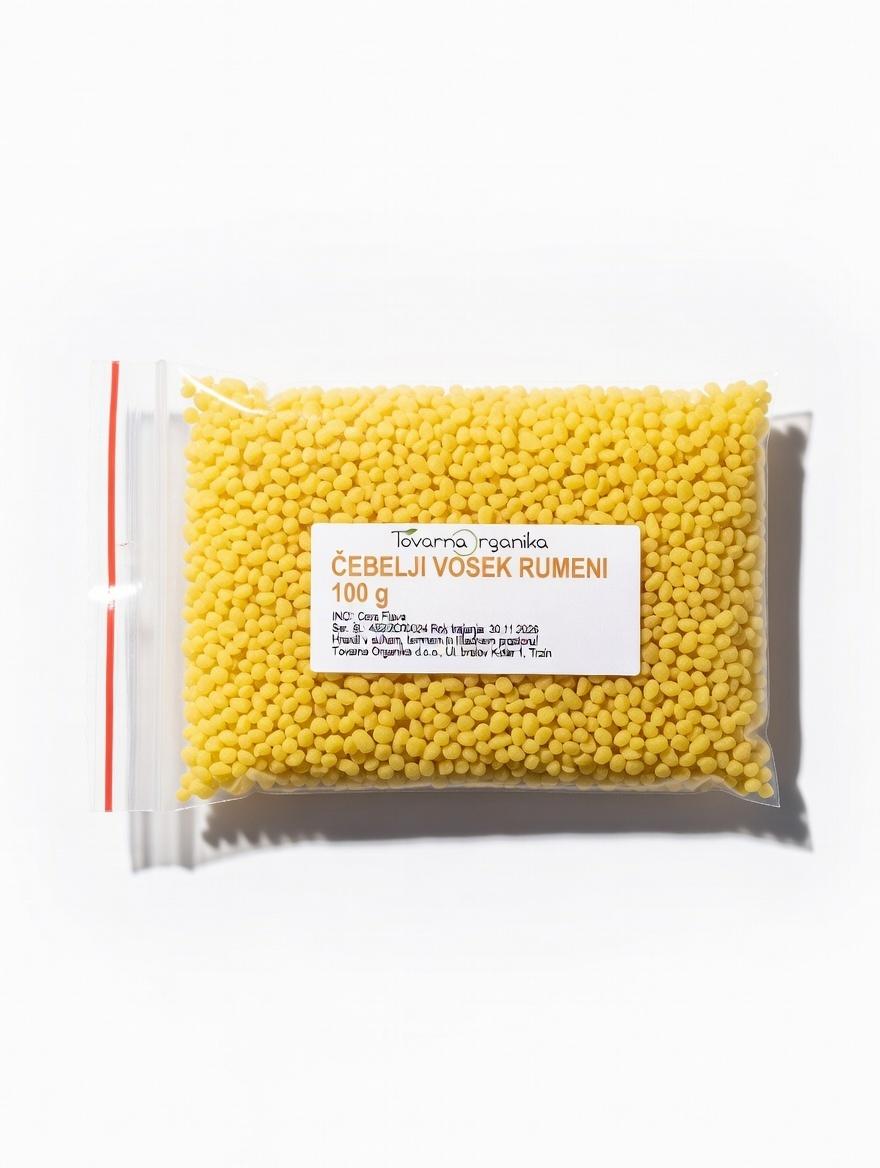


Yellow beeswax
Beeswax is an animal wax produced by honey bees of the species Apis mellifera in their wax glands. At 32-35°C it is plastic and pliable and can be easily kneaded, while at a slightly lower temperature (25-30°C) it is very strong; a full comb can hold several kilograms of honey.
Wax is not soluble in water. Some of its components can be dissolved in alcohol, but it is well soluble in many other organic solvents, such as ether and petrol. More than 300 individual components of wax are already known. The main constituents are esters of saturated fatty acids with monovalent aliphatic alcohols, which account for as much as 70% of all compounds. In addition to these, wax also contains free fatty acids, aliphatic hydrocarbons, pigments and aromatic substances, some mineral substances, and a significant amount of vitamin A. It is precisely because of this large number of natural compounds that many medicinal properties are attributed to it. For example, vitamin A is one of the key components for the proper development of human cells.
Beeswax is important for cosmetics and pharmaceuticals. It is used as an ingredient in creams, ointments, lotions, soaps, depilatory creams, cosmetics, and hair fixatives.
Beeswax gives the skin softness, elasticity, and moisture while simultaneously protecting it from ailments (it has anti-inflammatory action). It is widely used in preparations for healing wounds, burns, and other skin injuries. The essential extract from wax is a valuable substance in the perfume industry; in terms of its quality, it is not inferior to rose or jasmine oil. To obtain 1 kg of fragrance, 1 tonne of wax is required, which remains usable for making comb foundations after extraction.
Images are copyright protected.
The shape and size of the pellets may differ from those shown in the photographs.
Beeswax may contain a mild smoky scent, which is a natural consequence of the traditional production process. When working with honeycombs, beekeepers use smoke to calm the bees and thus enable safe and calm work. Some of this smoke can transfer to the wax, causing its characteristic smoky scent. This does not affect the quality or usability of the wax, but is rather a normal sign of its natural origin and unprocessed form.
Recommended Products


Rates vary by destination and complexity.
We recommend this shipping type based on item size, type and fragility.
Please contact us for more information.
We're really sorry for this.
Please contact us at info@tovarnaorganika.si to get additional support.
We're really sorry for this.
Please contact us at info@tovarnaorganika.si to get additional support.